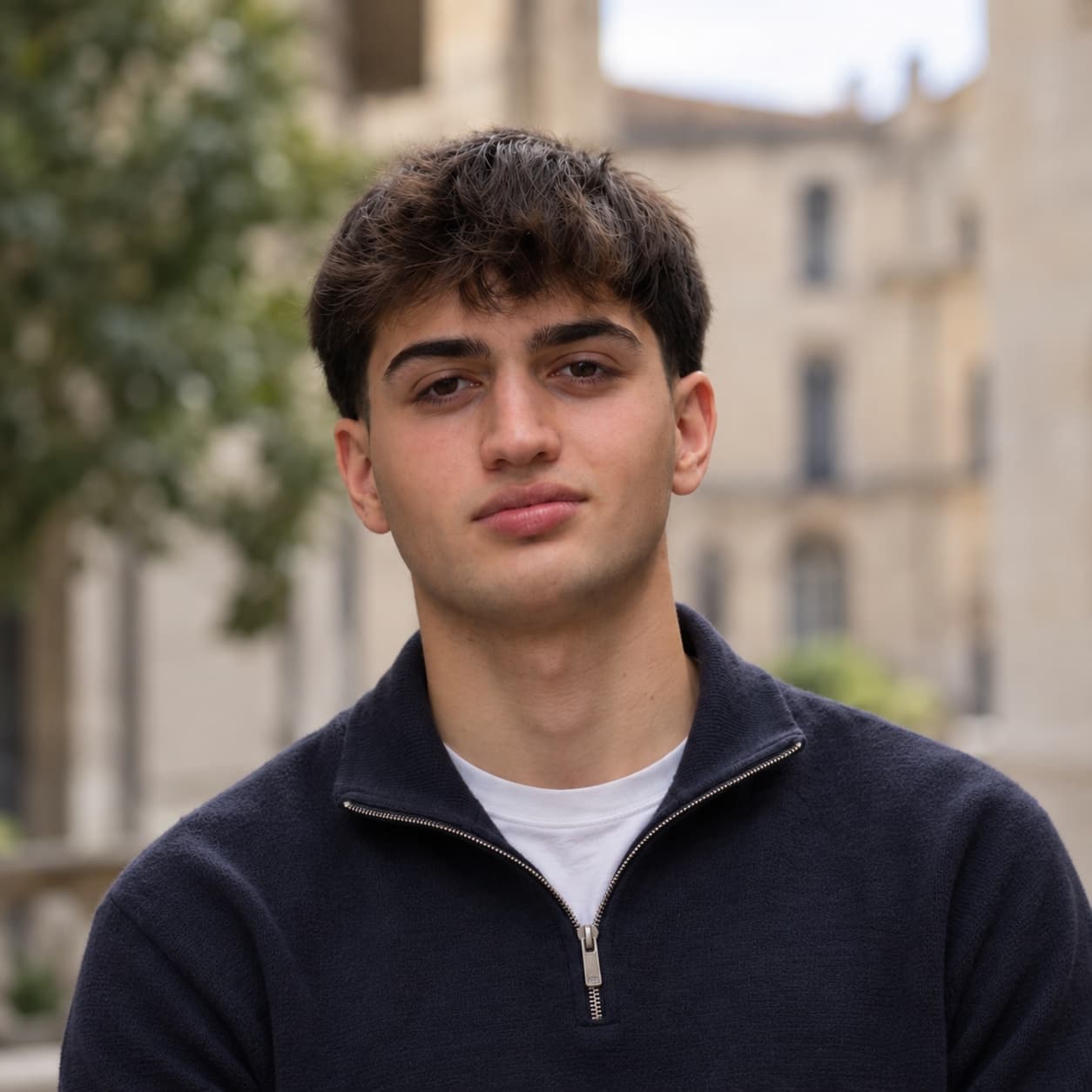
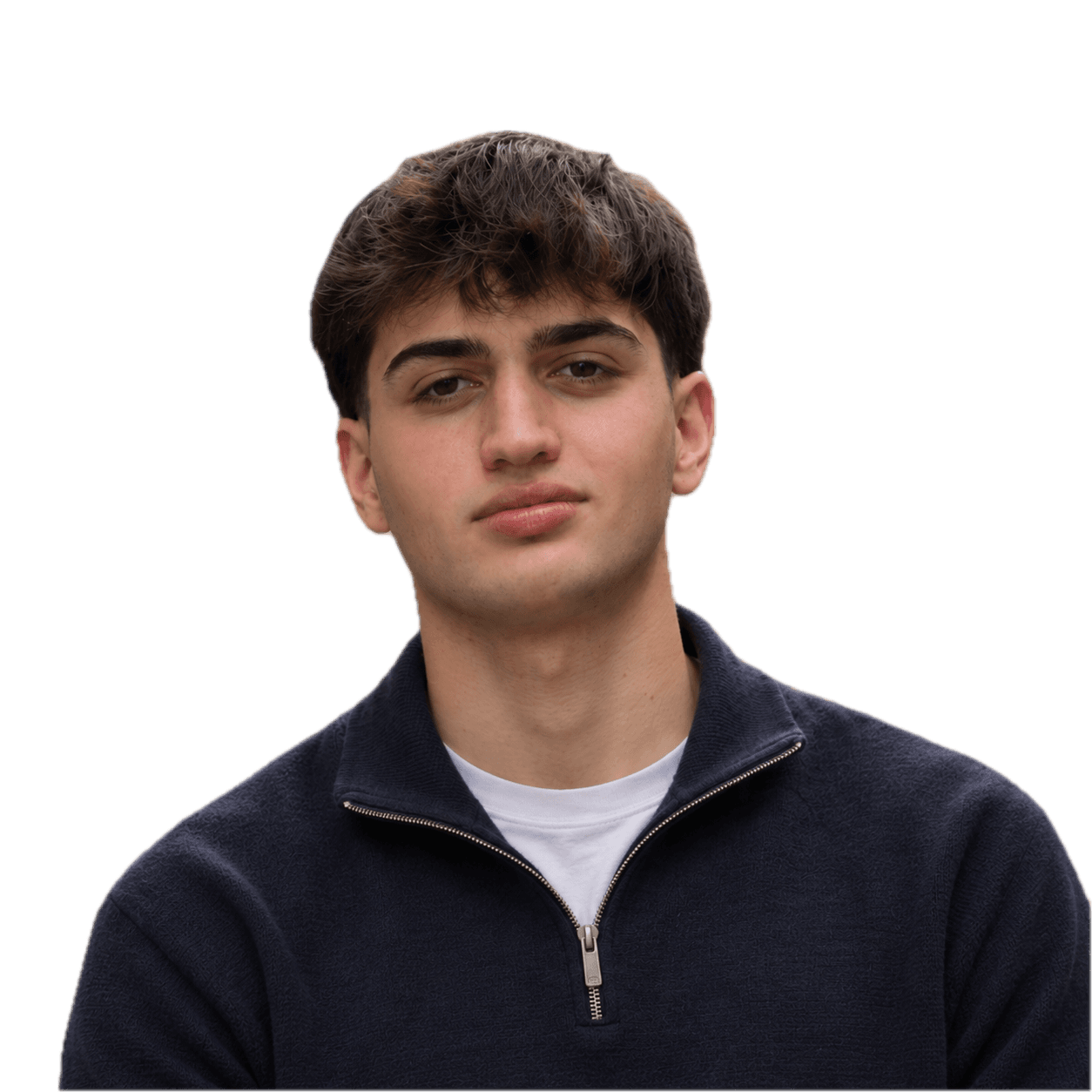
Barcelona, Spain
Guido Biosca Lasa
ML Engineer & CS Student
CS student at UPC Barcelona, working on model compression at Multiverse Computing. I like ML problems that don't have easy answers.
About Me

Studying Computer Engineering at UPC in Barcelona, finishing my degree while working as an ML engineer. I got into ML because I'm genuinely bothered by things I don't understand, and this field never runs out of those.
Right now I'm at Multiverse Computing working on CompactifAI, a platform for compressing large language models using tensor network methods. My teammates in the same role have PhDs. It's the kind of place where you either keep up or you don't, and I find that more motivating than the alternative.
Most of my personal projects started because something didn't work the way I wanted. The first version of my trading bot lost me real money, I rebuilt it from scratch and it's been running stable ever since. On the side I'm usually working on something, mostly to answer a question I couldn't find a good answer to.
Experience
They reached out while I was on exchange in Denmark. I came back, moved to Zaragoza on my own, and joined a team of ML researchers and PhDs working on CompactifAI, their platform for compressing LLMs with tensor network methods.
- Using tensor networks to compress large models without losing what makes them work
- Building the pipelines that turn the research into something that can actually run in production
- Working with the research and engineering teams to take ideas from paper to working code
Built backend systems and data processing pipelines for satellite imagery analysis. Also managed a small team of two interns.
- Built Python pipelines to process satellite imagery, spent a lot of time making sure the data stayed clean across sources
- Designed REST APIs, database schema, authentication and data-validation logic
- Managed two interns: split up the work, did code reviews and kept track of what we were shipping
- Did a fair amount of refactoring and debugging on the production system to make it more stable
Machine Learning & Data Analyst Intern
Jul 2024 — Dec 2024
Built fall and position detection models for a healthcare project using wearable wristbands with accelerometer and gyroscope sensors.
- Built fall and position detection models from time-series sensor data, the hard part was keeping the false positive rate down
- Cleaned and processed a lot of messy high-frequency sensor data from the wristbands
- Wrote Python scripts to pull together, filter and sync data coming from different sources
- Built some internal tooling to make the analysis and feature extraction less painful
Projects
Things I've built, mostly to scratch an itch or answer a question I couldn't find a good answer to
Bayesian GNNs for Molecular Dynamics
Extended PaiNN — an equivariant GNN for molecular dynamics — with Bayesian layers to add uncertainty estimates on top of energy and force predictions. Forces derived via autodiff, not learned directly.
Algorithmic Trading Bot
Built and ran a trading bot in live crypto markets. Momentum-based strategies, sub-second execution across 10,000+ markets, with a Telegram interface to monitor and control everything from your phone.
Real-Time Crypto Data Pipeline
Pulls real-time prices and order book data from multiple exchanges every second. Handles 48-hour retention automatically and exposes everything through a local API with live dashboards.
Wearable Fall Detection
CNN trained on raw accelerometer and gyroscope streams from wrist wearables to detect falls in real time. Main challenge: making it reliable enough to actually use without drowning in false positives.
Mapping Crypto Communities on Reddit
Co-mention graph of thousands of cryptocurrencies from r/CryptoMoonShots posts — to map which coins get talked about together, who's driving the conversation, and what the sentiment looks like per community.
WayHer – Women's Safety App
Route mapping app focused on women's safety. Working prototype with a live demo and a data model built with mobile in mind for when we take it further.
Research
Bachelor's thesis at FIB, Universitat Politècnica de Catalunya
Emotional Anatomy of a Transformer: Selective Compression and Mechanistic Interpretability of BERT
Directed by Lluís Padró Cirera · Computer Science, Computation specialisation
The question I started with was simple: if you compress a model trained to detect emotions, which parts actually matter? I took BERT fine-tuned on GoEmotions (28 emotion categories, multi-label) and applied truncated SVD to its 72 linear layers, testing each component type and encoder depth separately to see what breaks and what survives.
The second part is about understanding why. Using probing classifiers, activation patching and head ablation, I want to find out where each emotion actually lives inside the model and use that to compress smarter, not just smaller.
Research phases
- G1Baseline: BERT fine-tuning on GoEmotions
- G2SVD compression module
- G3Uniform compression + spectral analysis
- G4Component & depth sensitivity
- G5Lesion study and emotional map
- G6Mechanistic interpretability
- G7Informed compression strategy
Skills
ML & Data
Languages
Tools & Systems
Computer Science
Education
Exchange — Master-level courses
Computer Science
Technical University of Denmark (DTU)
Sep 2025 — Jan 2026
Took master-level courses in ML, Deep Learning and GNNs. The GNN project for molecular dynamics ended up becoming the basis of one of my personal projects.
Bachelor's Degree
Computer Engineering
Universitat Politècnica de Catalunya (UPC BarcelonaTech)
Sep 2022 — Present
Covered a lot of ground: algorithms, data structures, complexity, systems. The computation specialisation got me deep into ML theory.
Get in Touch
Open to research roles, full-time positions, or just an interesting conversation about ML. Drop me a line.